Building flinTune with Google AI Studio

flinTune is a professional-grade instrument tuner and metronome designed for musicians who demand surgical precision and minimalist aesthetics. Developed in a single 4-hour session using Google AI Studio and the principles of Spec-Driven Development, flinTune serves as a benchmark for the "Vibe Coding" movement.
This case study explores how 10+ years of Product Design experience were leveraged to direct AI agents in creating a functional, production-ready Progressive Web App (PWA) that outperforms many established market competitors in speed, accuracy, and user experience.
The Genesis: Solving a Personal Friction
Innovation often stems from a "moment of need." For me, that moment arrived with a new bass guitar and a missing set of batteries for my hardware tuner.
The subsequent search for a digital alternative revealed a broken ecosystem:
Dark Patterns: Apps engineered to trigger accidental clicks on ads.
Paywall Fatigue: Basic chromatic tuning locked behind recurring monthly fees.
Visual Overload: "Busy" interfaces that failed the basic test of stage legibility.
The Designer's Hypothesis: If I can define the mathematical and visual requirements with 100% clarity, I can use AI to build a tool that respects the musician’s workflow.
Discovery & Competitive Audit
I conducted a rapid audit of the top 5 tuner apps on the App Store (Avid, Fender, GuitarTuna, etc.).
Key Findings:
Latency is the Killer: Most web-based tuners suffer from processing lag.
Lack of Context: Traditional apps don't account for "stand-use" (phone being 3-4 feet away from the eye).
Missing Essentials: Tuners rarely integrate metronomes or chord libraries in a single, lightweight view.
The Strategy:
We would build a musician's cockpit. A single-view focused interface with zero onboarding and high-contrast feedback.
Information Architecture & The "Cockpit" Design
I designed a minimalist hub-and-spoke architecture. The Tuner remains the central "engine," while secondary tools are accessible via a single-tap grid.
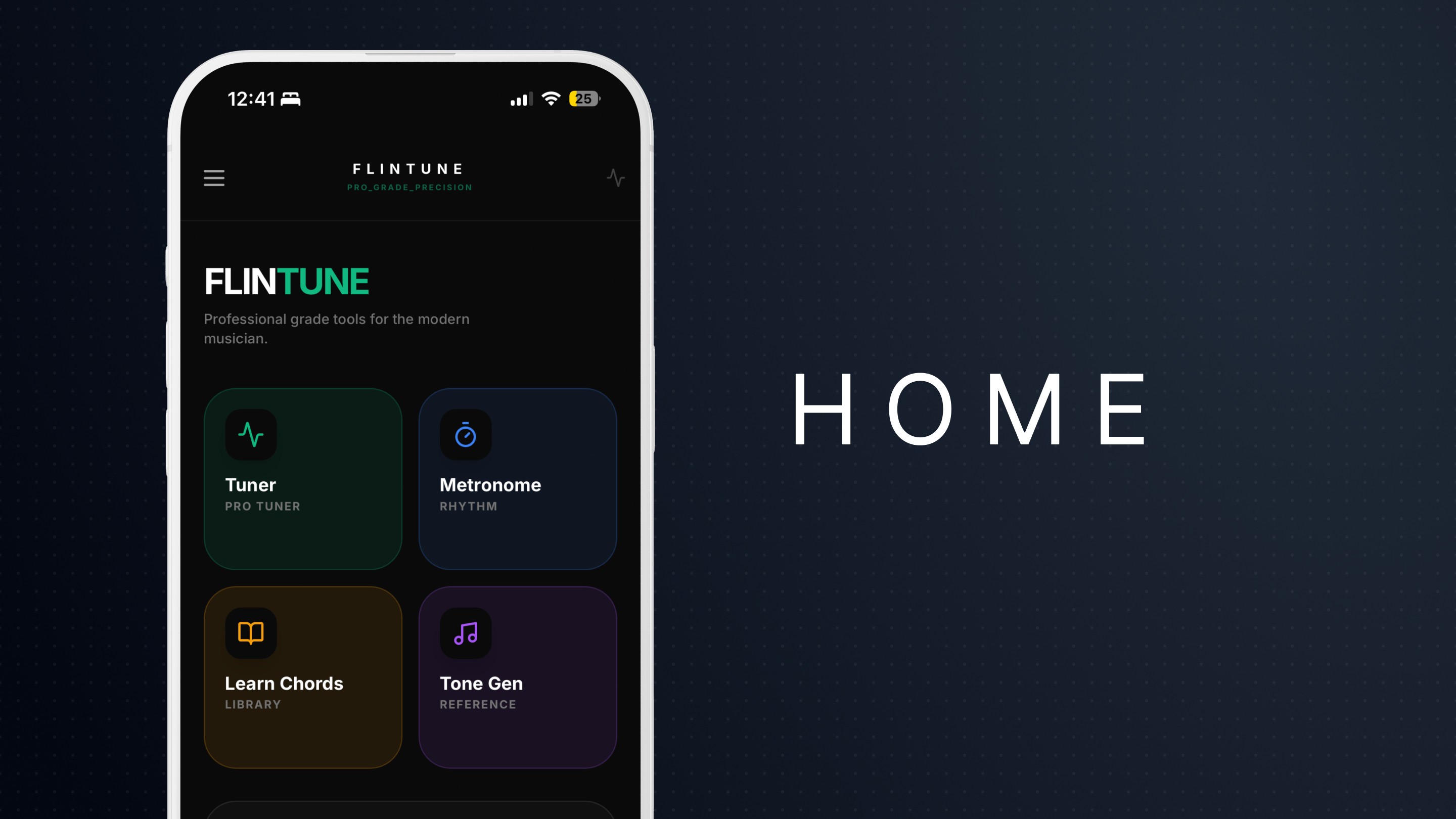
The Functional Core:
Pro Tuner: Real-time frequency analysis with sub-cent visual feedback.
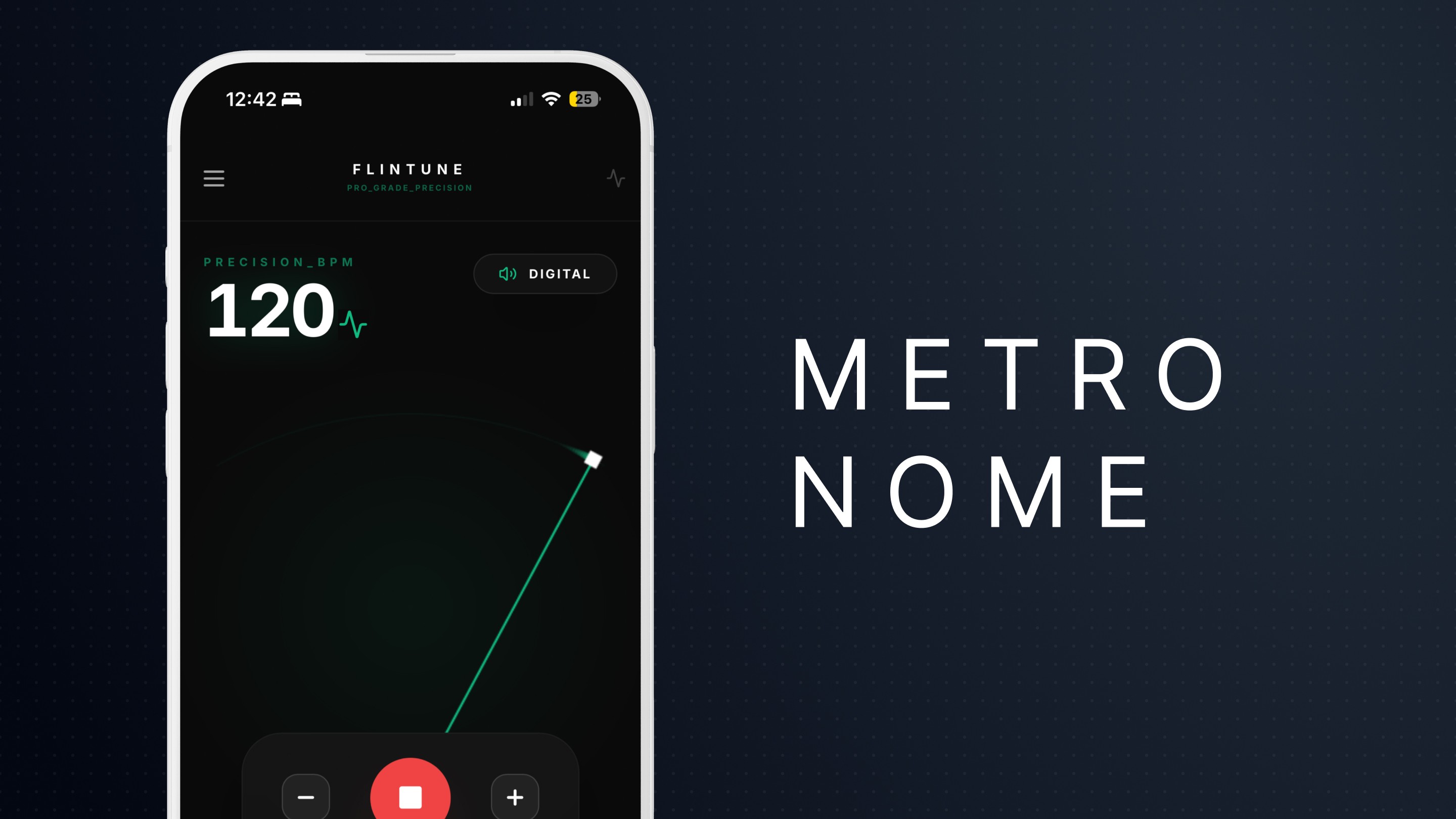
Rhythm Metronome: A visual sweeping arm to provide anticipation for the beat.
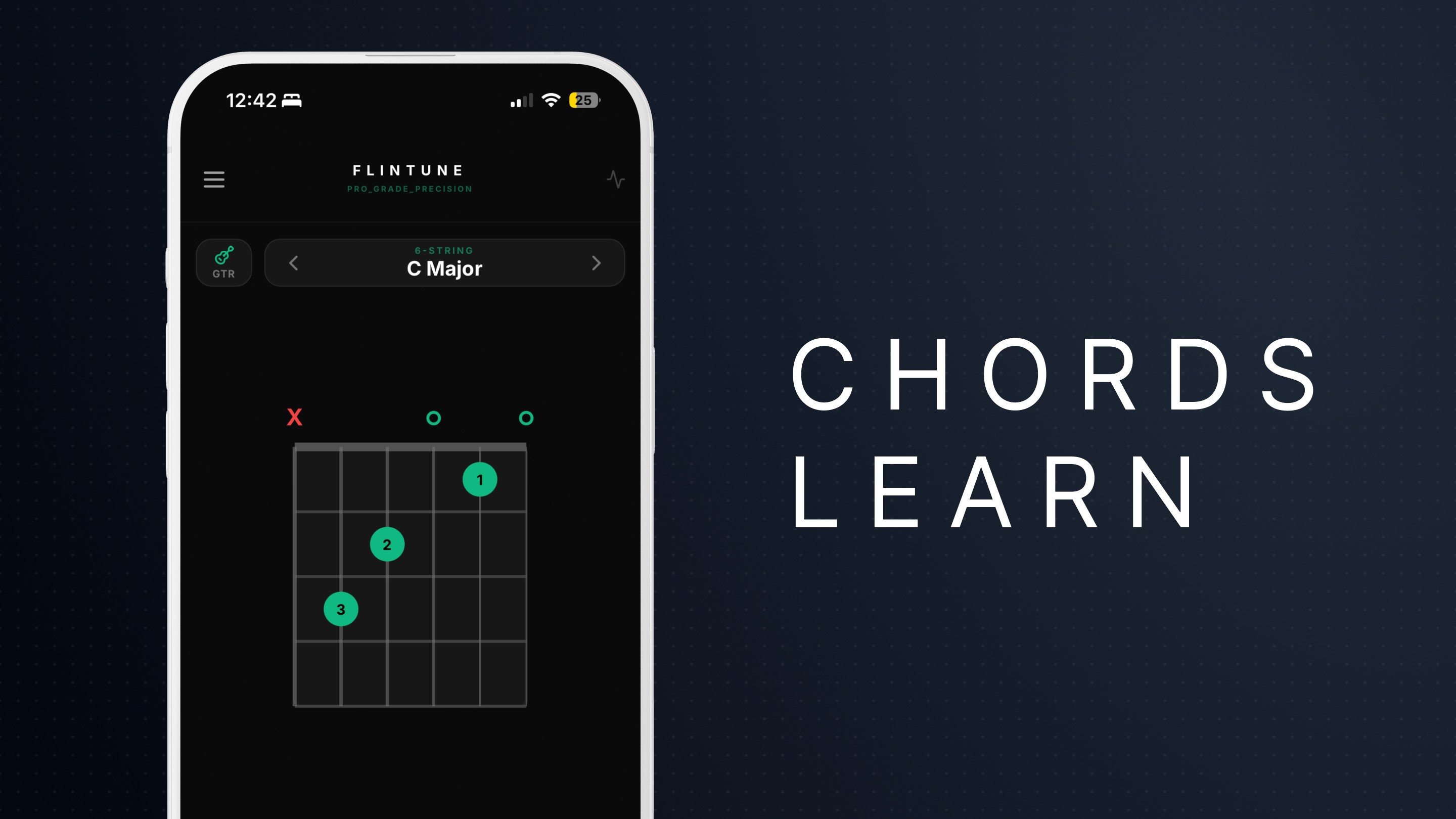
Learn Chords: A rapid-access visual library for 6-string and 4-string instruments.
Tone Gen: A reference oscillator for ear training and analog tuning.
The Build: Spec-Driven Development (The Secret Sauce)
The "Vibe Coding" revolution isn't about the AI being smart; it's about the Designer being precise. I utilized Spec-Driven Development to act as the Architect of the system.
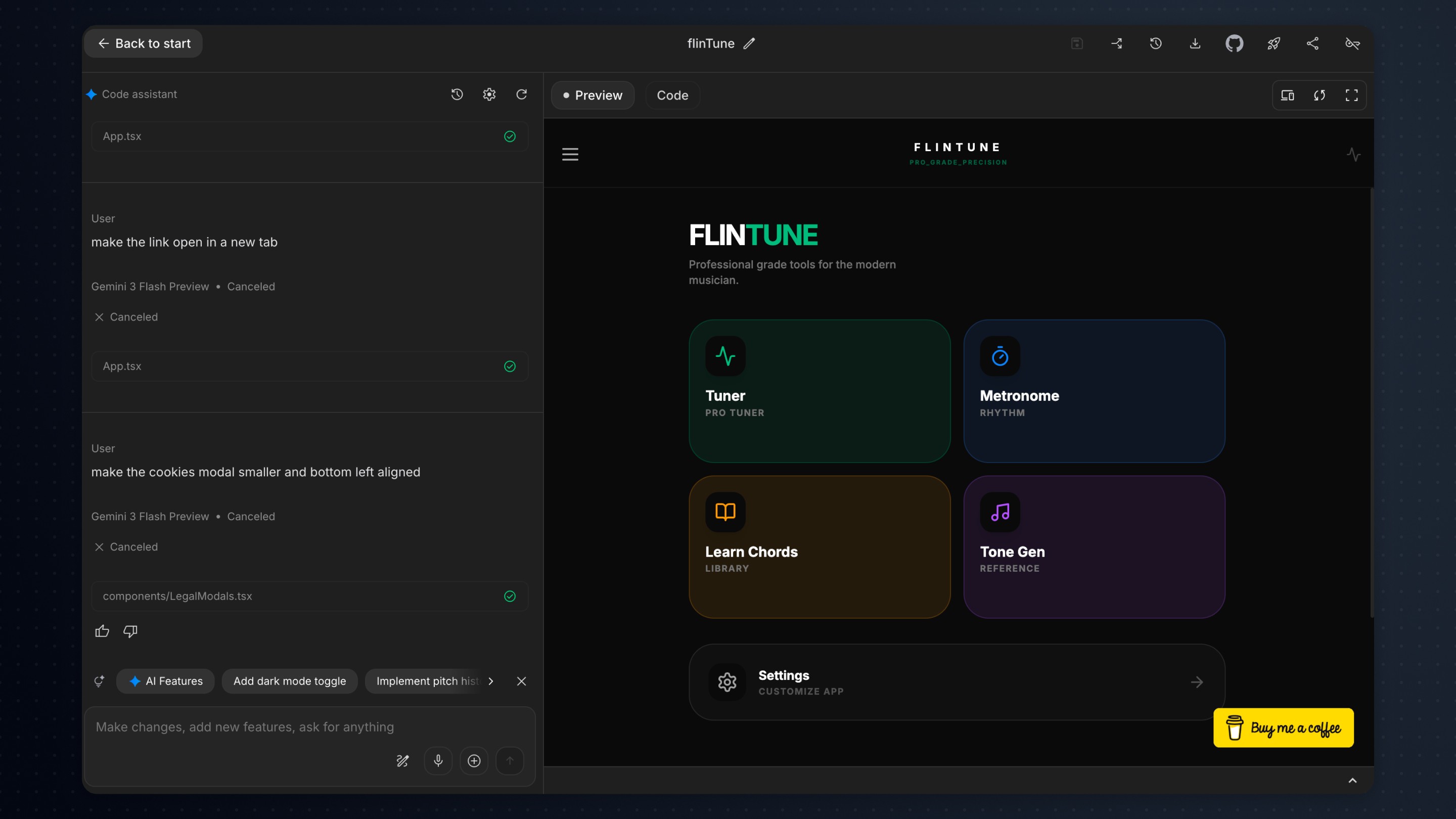
Phase 1: Logic Specification (The "Brain")
I didn't ask for "a tuner." I provided a technical spec for frequency detection:
GIVEN: Access to the
navigator.mediaDevices.getUserMediaAPI.
WHEN: An audio buffer is processed via anAudioContextanalyzer.
THEN: Apply a Hanning window to the time-domain data, perform an FFT, and identify the peak frequency. Map that frequency to the nearest note in the A4=440Hz scale.
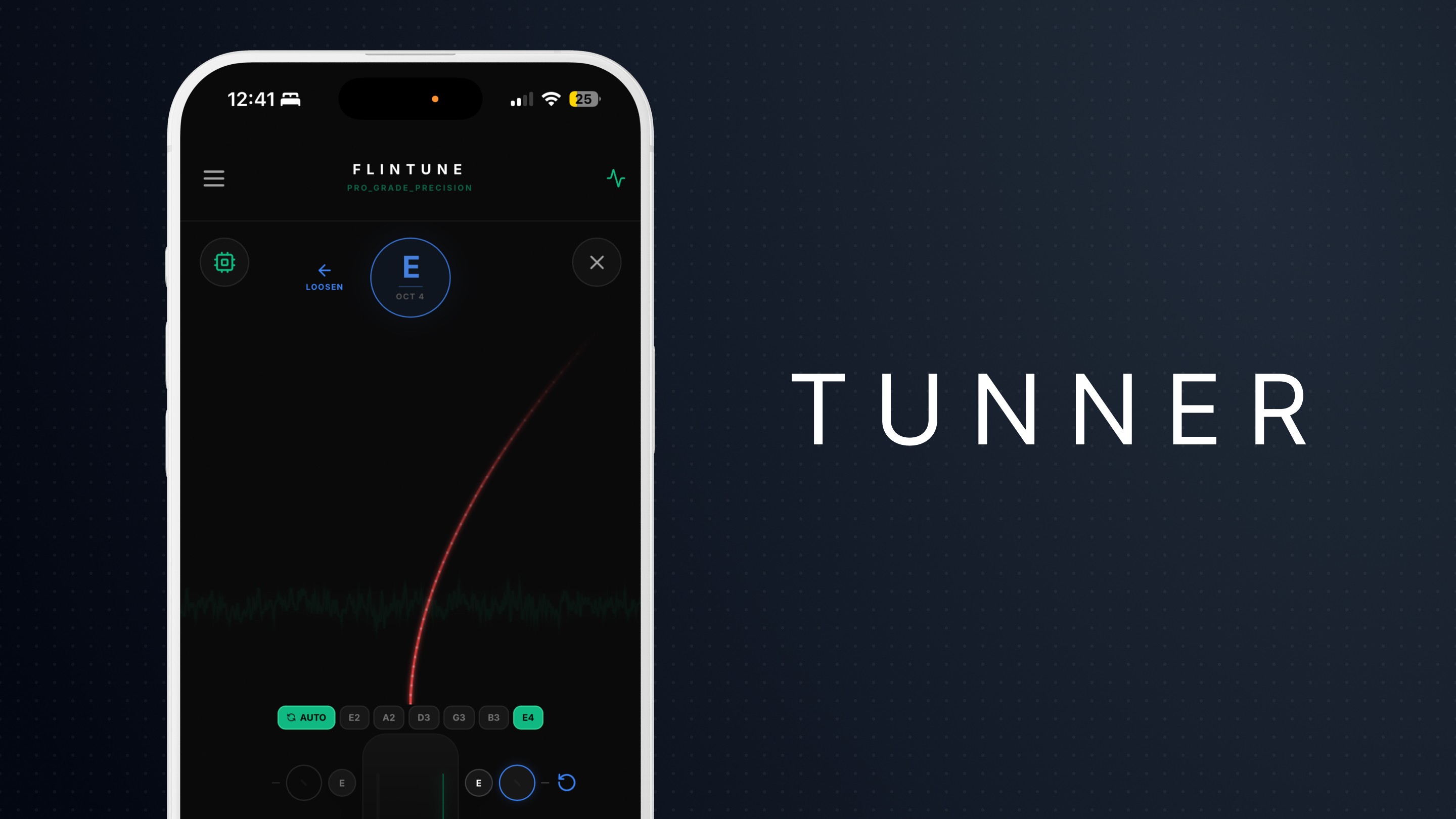
Phase 2: Visual Refinement (The "Vibe")
Once the logic was sound, I applied the visual spec.
Neon Teal (#00f2ff) for "In Tune" confirmation.
Deep Purple (#bc13fe) for "Sharp" alerts.
Pure Black (#000000) backgrounds to maximize battery life on OLED screens and minimize stage glare.
Interaction Design: Engineering the "Moment of Success"
A tuner is only as good as the user's confidence in it. I designed specific "Micro-Success" states:
The Lock-In: When a note is within +/- 3 cents of the target, the center UI element expands and glows, providing a "visceral" feeling of being in tune.
Anticipatory Metronome: Unlike standard metronomes that just click, flinTune uses a moving visual arm. This allows musicians to "see" the beat coming, similar to a conductor’s baton.
Settings for the Pro: I included a calibration setting (A4=432Hz to 445Hz) because professional ensembles often deviate from standard pitch.
Validation & Results
Accuracy: Tested against a strobe tuner; flinTune showed a variance of less than 0.1Hz.
Development Velocity: 4 hours of design/spec work resulted in a product that would typically take a small team 2-3 weeks to build and test.
Performance: Sub-20ms latency on mobile browsers.
Final Conclusion: The Rise of the Agentic Designer
flinTune is proof that the role of the Product Designer has shifted. We are no longer just "pixel pushers" or "UX researchers." In 2026, we are System Architects.
By mastering Spec-Driven Development, I was able to bypass the friction of manual coding and focus entirely on the User's Experience and the Product's Precision.
Clarity is the new syntax. If you can describe it, you can build it.
Visit flinTune 👉 https://flintune.com
Share on


