Pencil + Vibe Design: Weeks to Hours

I used to burn an embarrassing amount of time on the same “serious designer” ritual: starting from zero.
You know the one.
New side project → blank canvas → and suddenly I’m rebuilding a design system, defining tokens, setting up base layouts, creating scaffolding… again. It’s the kind of work that feels productive because it’s real work. But it’s also the kind of work that quietly eats your best thinking hours.
And here’s the punchline: the user doesn’t care.
Recently, Pencil plus a vibe design mindset flipped my workflow.
Not by making me “design faster” in a shallow way.
But by removing the sticky, repetitive parts of the process—so I can focus on the only thing that actually differentiates a product: the experience.
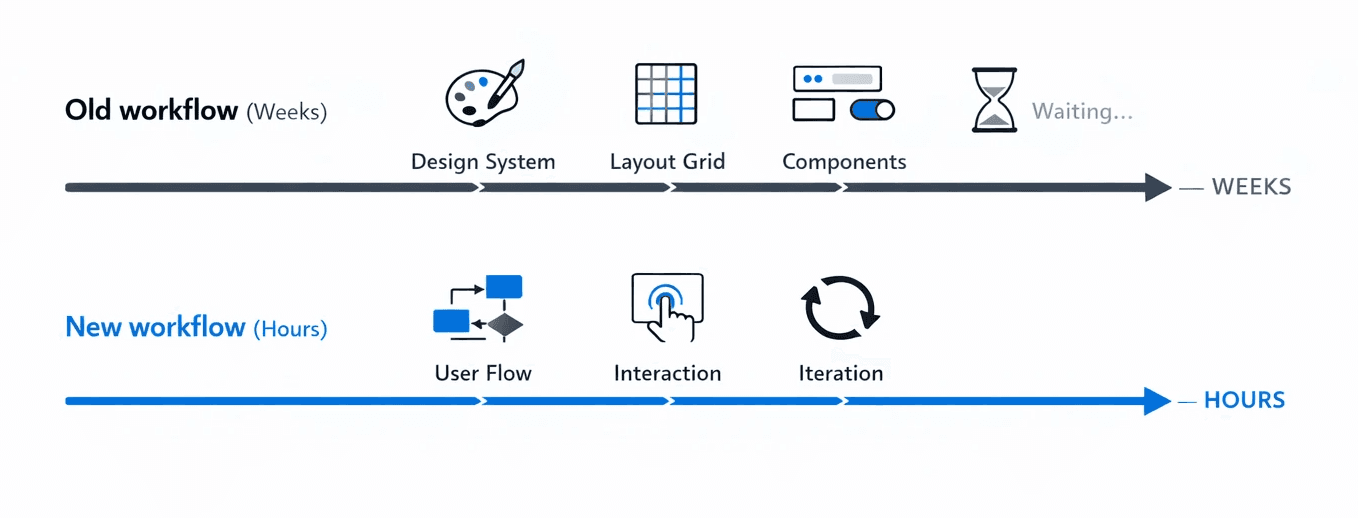
On this side project, that change has been dramatic: from weeks to hours.
The old trap: spending your best hours on the least valuable work
When I start a side project, I want to be thinking about:
the user’s first minute,
the flow that makes the product feel inevitable,
the microinteractions that build trust,
and the edge cases that usually get ignored until they hurt.
Instead, I’d lose days building the same foundation:
spacing + type scales,
buttons + inputs,
layout templates,
“just enough” components to feel consistent… and then accidentally overbuild.
It’s design debt in reverse. You’re paying interest on polish before you’ve validated the experience.
And if you’ve ever felt the designer–developer gap widen right after “handoff,” you know why this matters: the more time you spend perfecting infrastructure, the easier it is to ship something that looks finished but still behaves ambiguously.
(If that sounds familiar, I wrote about the designer–developer gap here)
What Pencil changes (for me)
The simplest way I can explain it is this:
Pencil helps me stop rebuilding design systems and layouts from scratch—so I can spend my energy on the parts that make the product feel right.
That means:
less blank-canvas anxiety,
fewer hours recreating predictable UI patterns,
faster iteration on the flow,
and a lot less time stuck in setup mode.
It pairs well with vibe design because vibe design is basically: ship the feeling, validate the experience, then earn the polish.
But here’s the thing—this only works if you’re honest about what’s repetitive vs what’s essential.
🌟 My current workflow (side project edition)
1) Start with experience, not a system
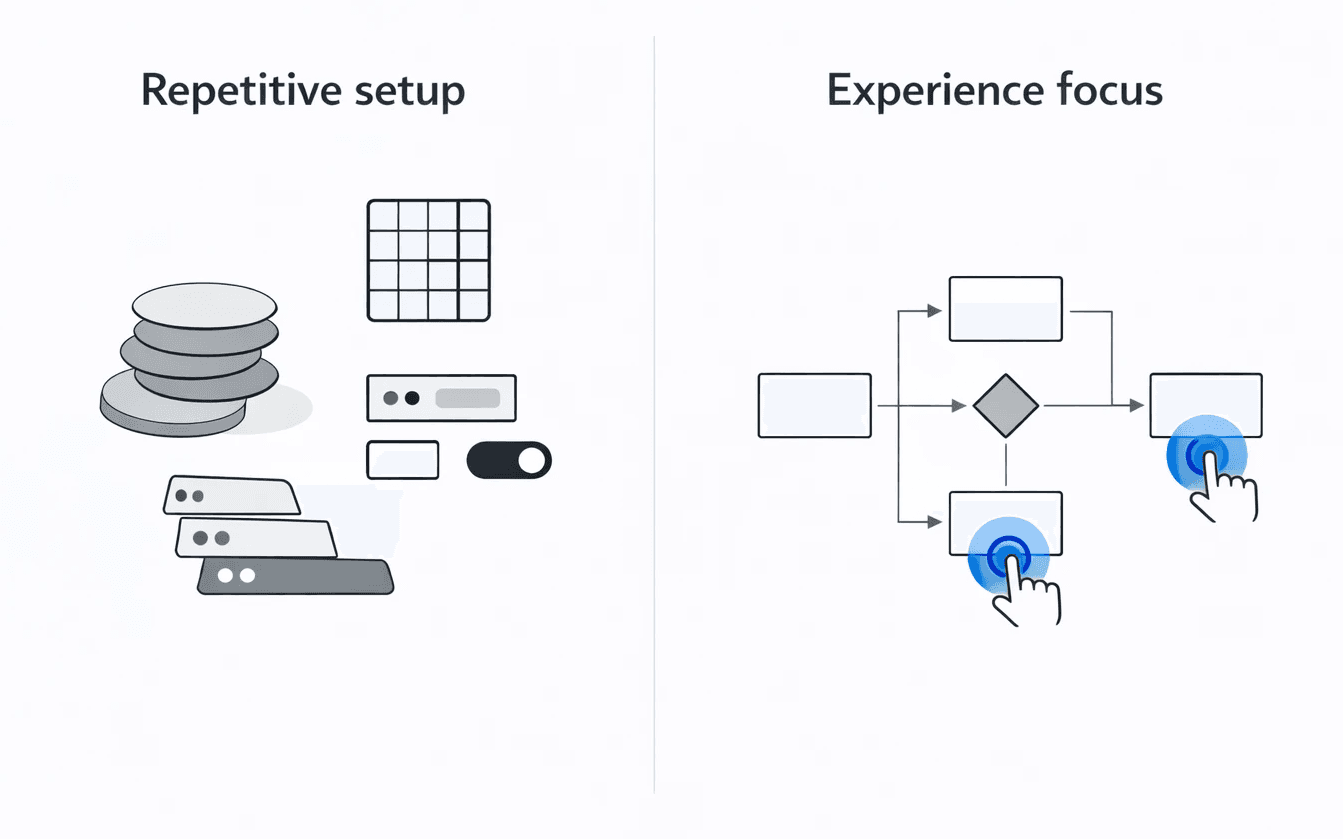
I begin with:
the core flow,
the “moment of value,”
the screen where the product either clicks… or doesn’t.
I’m not starting with a button component. I’m starting with what the user is trying to do.
2) Let the system emerge (don’t force it up front)
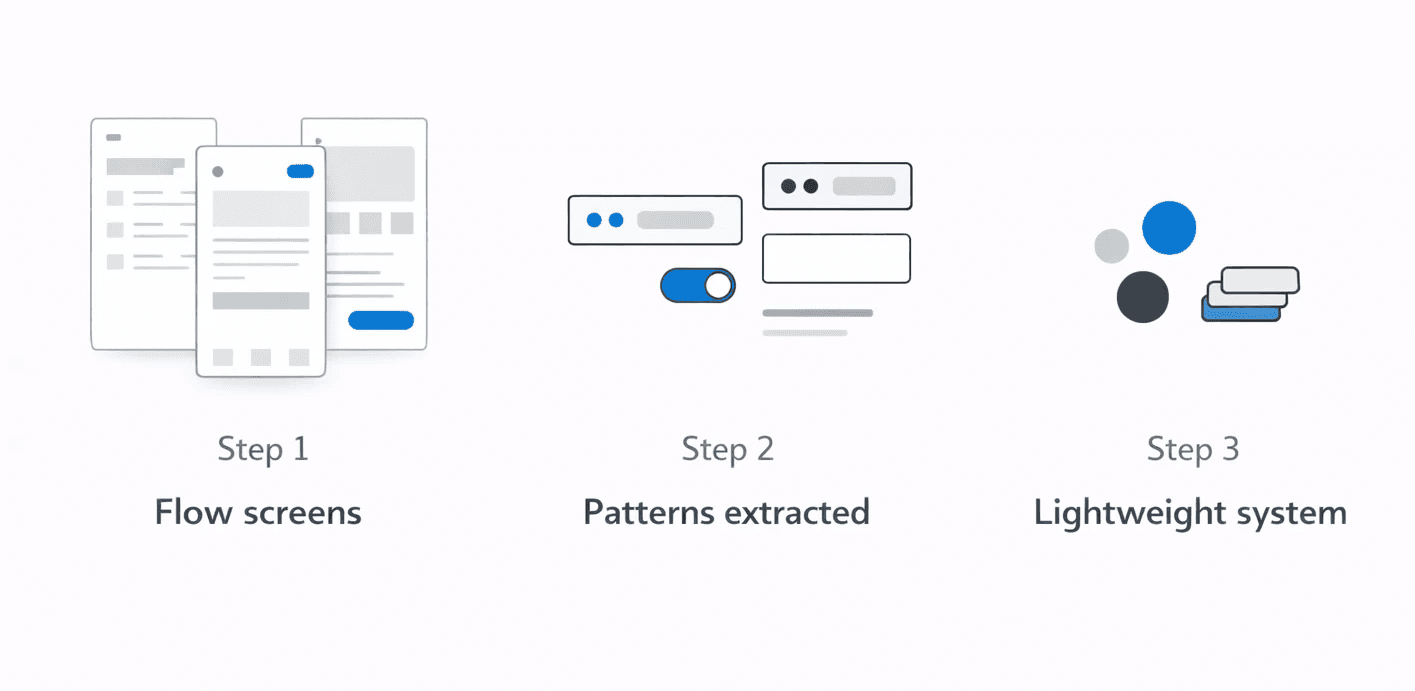
As patterns repeat, I formalize them. But I don’t pre-build a cathedral.
This is the part that used to take weeks:
defining a UI kit,
setting up variants,
creating templates “for consistency.”
Now it’s closer to:
build what I need,
extract patterns when they’re real,
keep moving.
3) Make the “boring work” smaller—so iteration gets cheaper
The immediate outcome is simple: I can test more directions in less time.
And in a side project, speed isn’t a growth hack. It’s oxygen.
Why “weeks to hours” isn’t an exaggeration
When your workflow is dominated by repetitive setup, polish becomes procrastination.
Once that friction is gone, you can:
explore 3–5 UX directions in a day,
adjust the flow after feedback immediately,
keep momentum without sacrificing craft.
That’s also why this feels like paying down design debt (in reverse)—you’re not adding complexity before you know what’s worth building.
(If you’re into the idea of design debt as a real strategic cost, here’s my deep dive.)
Tool vs mindset: what matters more than Pencil
Pencil is the enabler. The real shift is this:
Stop proving you can build a design system. Start proving you can build an experience.
A design system is a multiplier.
But you need something worth multiplying first.
And that’s the same energy I like in AI product work too: skip the gimmicks, keep the intent.
If you want that angle, this post is related.
What I’m focusing on now (instead of setup)
Once the repetitive stuff isn’t blocking me, I get to spend time where it actually pays off:
microinteractions that reduce hesitation,
tiny UX details that turn “works” into “feels good,”
accessibility basics that stop being an afterthought.
On that note: microinteractions are my favorite ROI-per-minute design investment—here’s why.
🔥 If you want to try this: my 3 rules
Default to experience-first. If it doesn’t change the user outcome, delay it.
Ship the flow before the library. Patterns should emerge from real screens.
Timebox infrastructure. Give yourself hours, not weeks.
If your side project feels slow, it might not be because you’re not good enough.
It might just be because you’re spending your best thinking time rebuilding the same foundations.
And I’m curious—what’s the most repetitive part of your design workflow right now?
Share on


